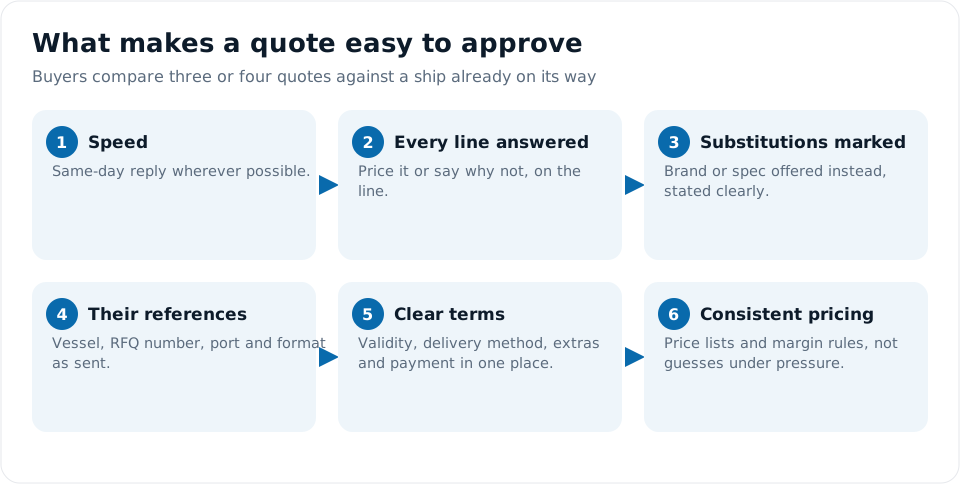
Ask a purchaser why they picked one chandler over another and price is rarely the only answer. More often it is “they came back first”, “their quote was complete” or “I didn’t have to chase them”. Buyers are comparing three or four quotes against a vessel that is already on its way, and the quote that is easiest to approve has a real advantage. Here is what tends to separate the quotes that win from the ones that do not.
Measure your win rate first
You cannot improve what you do not track. Keep a simple log of every RFQ: date received, date quoted, value, and whether it became an order. After a month or two you will see your win rate by customer, port and RFQ size, and you will usually spot a pattern, such as losing most large RFQs, or winning almost everything you quote on the same day.
What makes a quote easy to approve
Speed
Ships run to port windows. A complete quote that arrives the same day often beats a slightly cheaper one that arrives two days later, because the purchaser needs to place the order in time for delivery. If large RFQs take you a full day to price, that is usually the first thing to fix. The RFQ-to-quote process guide shows where those hours go.
Every line answered
Blank lines force the purchaser to chase you or to split the order. Price every line you can, and for anything you cannot supply, say so on the line with a short reason. A partial quote that is honest about what is missing is still easier to work with than one that quietly drops lines.
Substitutions marked clearly
If the requested brand is not available and you offer an equivalent, say so on the line, with the brand or specification you are offering. Silent substitutions are one of the most common causes of disputes on delivery, and buyers remember suppliers who caused them. Item code matching against your own catalogue makes this much easier to get right every time.
Their references, their format
Use the vessel name, RFQ number, port and delivery date exactly as the buyer sent them. If they asked for prices in their own template or currency, use it. Every bit of rework you leave them is a small reason to pick someone else next time.
Clear terms
State validity, delivery method (truck, launch, at berth or anchorage), any extra charges and payment terms in one place. Hidden extras that appear on the invoice are a quick way off a purchaser’s shortlist.
Price, honestly
Price still matters, but chandlers often lose on price because they guessed it from scratch under time pressure. Using consistent price lists and margin rules per customer and category stops the swings between overpricing one quote and underpricing the next. It also means you can explain your price if a buyer pushes back.
When you lose a quote you expected to win, ask. A short, polite question to the purchaser (“was it price, timing or something else?”) gets an answer more often than you might think. Our guide on following up on marine quotes has wording that does not sound like begging.
Tidal is built to lift win rate on the RFQs you already receive: it reads each RFQ from your inbox, matches every line to your catalogue, applies your own prices and margin rules, and flags anything uncertain for review, so complete quotes go out in minutes. See it on one of your own RFQs.
Most often because the quote arrived after a competitor’s, left lines blank, substituted items without saying so, or needed rework before it could be approved. Price matters, but speed and completeness decide many orders.
How can a marine supplier improve its quote win rate?
Track every RFQ and outcome, quote the same day where possible, answer every line, mark substitutions clearly, use the buyer’s references and format, state terms in one place, price from consistent lists and margin rules, and ask for feedback on losses.
Is the cheapest quote always the winner in ship supply?
No. Buyers are under time pressure and weigh reliability heavily. A complete, clear quote that arrives first often wins over a cheaper one that arrives late or needs chasing.
More RFQs only help if you can quote them fast
Send us a real RFQ and we will show you Tidal turning it into a priced quote on your own catalogue.
 Customer Login