By the time an RFQ lands in your inbox, the purchaser has usually sent the same request to two or three other suppliers. The best chance to win the order without a price fight is earlier, when the vessel has been fixed for your port but nobody has asked for a quote yet. That window is often a week or more, and the information you need to use it is far more available than it used to be.
Where arrival information comes from
Port authority schedules. Many ports publish expected arrivals and berth plans on their website. They are free and often updated daily.
AIS and vessel tracking services. Commercial tracking tools show a ship’s declared destination and ETA, and many let you filter by port and vessel type and set alerts.
Port agents. Agents know which ships are coming, for which owner, and roughly when. A good relationship with two or three agents in your port is worth more than any database.
Your own customers. Fleets you already supply will call again. Keep a simple list of their vessels and watch for them.
A simple weekly routine
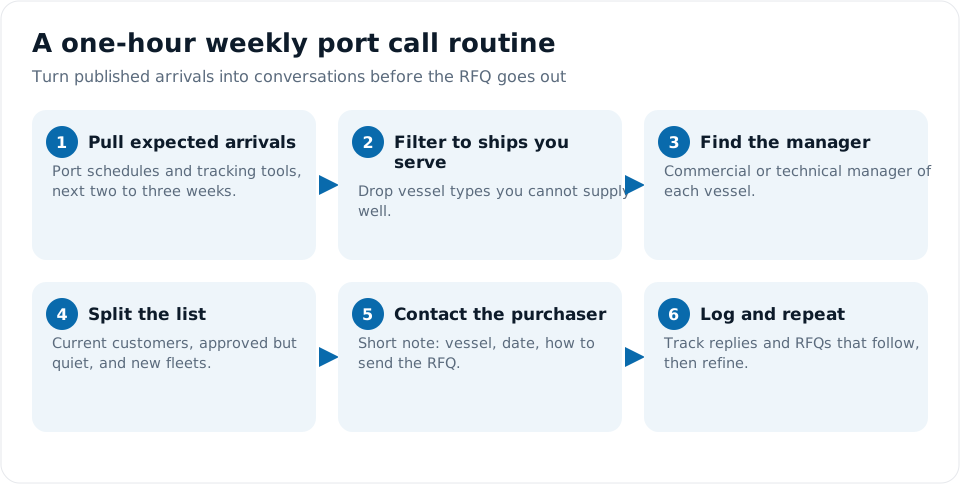
This does not need a sales team. One person, an hour a week and a spreadsheet or CRM will do:
Pull the expected arrivals for your ports for the next two to three weeks.
Filter to ships you can serve. If you are strong on provisions for crewed cargo ships, you can ignore tugs and harbour craft.
Identify the manager of each vessel. Tracking services and public registers usually show the commercial or technical manager.
Split the list: fleets you already supply, fleets where you are approved but rarely asked, and fleets you do not work with yet.
Contact the purchaser for the first two groups with a short note: you see the vessel is due on a date, you are ready to supply, and here is how to send the RFQ.
For the third group, use the arrival as a reason to start the approval conversation.
What a good pre-arrival note looks like
Keep it short and specific. Name the vessel and the expected date, mention one thing you can do that is useful for that port call (a launch delivery at anchorage, a bonded store delivery, a same-day top-up), and give a single address for RFQs. Do not attach a catalogue. The goal is to be the name the purchaser remembers when they open a new RFQ, not to sell everything at once.
ETAs move. Treat them as a reason to get in touch, not as a delivery date.
Do not pester the vessel directly if the fleet buys through head office. It can annoy the purchaser you actually need.
Check sanctions and ownership before chasing a vessel you do not know. Our sanctions screening guide explains why that matters for suppliers too.
Early contact works best when you can reply fast once the RFQ arrives. Tidal reads the RFQ straight from your inbox and prepares the quote on your catalogue and prices, so the advantage you gained by being early is not lost in a day of retyping.
How do ship chandlers know which vessels are coming to port?
From published port authority arrival schedules, AIS vessel tracking services that show destination and ETA, port agents who handle the calls, and their own records of which customer vessels trade on which routes.
Should a chandler contact the vessel or the ship manager?
For managed fleets, contact the purchasing team at the ship manager, since they send the RFQs and approve suppliers. Contact the vessel directly only where the fleet lets masters or chief cooks order themselves.
How far ahead should I contact a purchaser about an upcoming port call?
Around one to two weeks before the expected arrival is a sensible window. It is early enough to be considered before the RFQ goes out and close enough that the call is likely to happen.
More RFQs only help if you can quote them fast
Send us a real RFQ and we will show you Tidal turning it into a priced quote on your own catalogue.
 Customer Login