How to get on a ship manager’s approved supplier list
Most fleet RFQs only go to approved vendors. Here is what purchasing teams usually ask for, and what makes them actually use you once you are on the list.
If you supply ships, the approved supplier list (sometimes called the approved vendor list or AVL) is the door to steady work. Managed fleets rarely send RFQs to suppliers they have not vetted, because the purchaser has to justify every new name to the technical department, the owner and sometimes an auditor. Getting approved is not hard, but it takes patience and a bit of preparation, and plenty of suppliers give up halfway.
What a vendor registration usually asks for
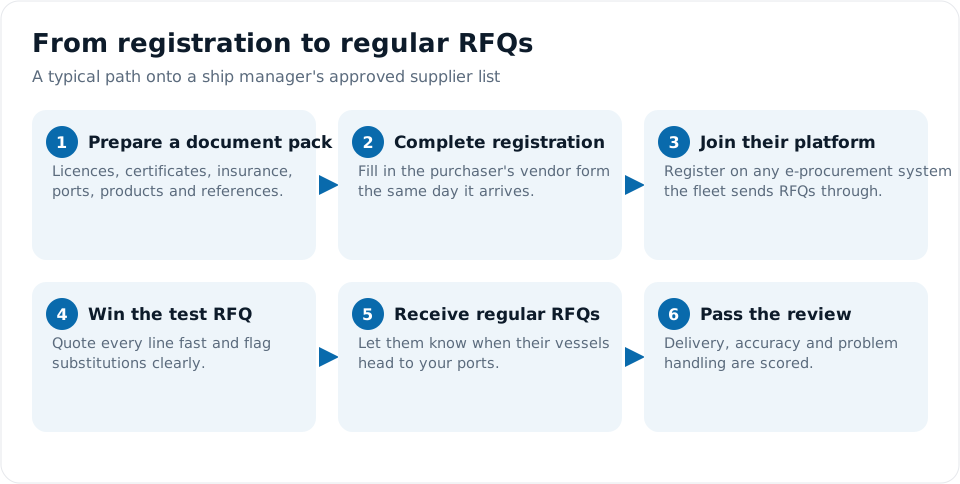
Every company has its own form, but the same items come up again and again. Have them ready as a single, up-to-date pack so you can reply the same day a form arrives:
Company documents: registration certificate, trade licence for the port, tax and VAT details, bank details on letterhead.
Ports and coverage: exactly which ports and anchorages you deliver to yourself, and which you cover through partners. Be honest; purchasers check.
Product scope: provisions, bonded stores, deck and engine stores, cabin stores, safety equipment, chemicals, technical spares. Say what you stock and what you source.
Quality and management certificates: ISO 9001 is the most common request, with food safety certificates for provisions suppliers.
Insurance: product and public liability cover, with the certificate attached.
Compliance: a sanctions and anti-bribery statement, and often a signed copy of the buyer’s supplier code of conduct.
References: two or three fleets you already supply, with a contact who will actually answer.
How the approval usually happens
In most ship management companies the purchasing team owns the list, but approval of a new supplier needs a reason. That reason is usually one of three things: an existing supplier in the port has let them down, they are adding vessels on a new trade, or they want a second quote to keep prices honest. Your timing matters more than your brochure. A supplier who gets in touch the week after a competitor’s bad delivery gets a very different reception from one who sends a cold email in a quiet month.
Some fleets also require registration on the e-procurement platform they use to send RFQs. If a buyer tells you their enquiries go through a particular system, register there too, otherwise you will be approved on paper and still never see an RFQ.
Getting the first RFQ after approval
Approval is a licence to quote, not a promise of orders. New suppliers are often tested on a small or awkward RFQ first. Treat it as the real interview:
Quote every line. If you cannot supply something, say so on the line rather than leaving it blank.
Mark any substitution clearly, with the brand or specification you are offering instead.
Reply fast, ideally the same day, even if a few prices are still to be confirmed.
Use the buyer’s references, vessel name and RFQ number exactly as they sent them.
Purchasers remember who made their life easy. Our guide to winning more marine RFQs goes deeper on what a strong quote looks like.
Many fleets review suppliers once or twice a year, scoring on-time delivery, accuracy, price and how problems were handled. You do not see the scorecard, but you can influence every line of it. Deliver what was quoted, send paperwork that matches, flag delays before the vessel notices them, and make credit notes painless when something goes wrong. A supplier who quietly fixes problems is worth more to a purchaser than one who is a few percent cheaper.
Being approved by more fleets means more RFQs to price. If quoting is already a bottleneck, see how Tidal turns inbox RFQs into draft quotes on your own catalogue and margins.
It is the list of vendors a ship manager or owner has vetted and allowed to receive RFQs and purchase orders, usually organised by port and product category. Purchasers generally send enquiries only to suppliers on that list.
What documents do ship managers ask for when approving a supplier?
Typically company registration and trade licence, tax and bank details, the ports and products you cover, quality certificates such as ISO 9001, liability insurance, a sanctions and anti-bribery statement, a signed supplier code of conduct and a few customer references.
How long does supplier approval take?
It varies widely. Some purchasing teams approve within a couple of weeks once documents are complete, others wait until they have a concrete need in your port. Having a complete document pack ready shortens it considerably.
How do I get RFQs after being approved?
Make sure you are also registered on any e-procurement platform the fleet uses, let the purchaser know when their vessels are heading to your ports, and treat the first small RFQ as a test: quote every line, flag substitutions and reply quickly.
More RFQs only help if you can quote them fast
Send us a real RFQ and we will show you Tidal turning it into a priced quote on your own catalogue.
 Customer Login