Marketing a ship supply business is not like marketing a shop. Your buyers are a few hundred purchasing staff and superintendents, not the general public, and they buy from people they trust to deliver on time to a moving ship. Glossy campaigns rarely move the needle. What does is being easy to find, easy to understand and easy to send an RFQ to, at the moment someone needs a supplier in your port.
1. A website that answers the purchaser’s three questions
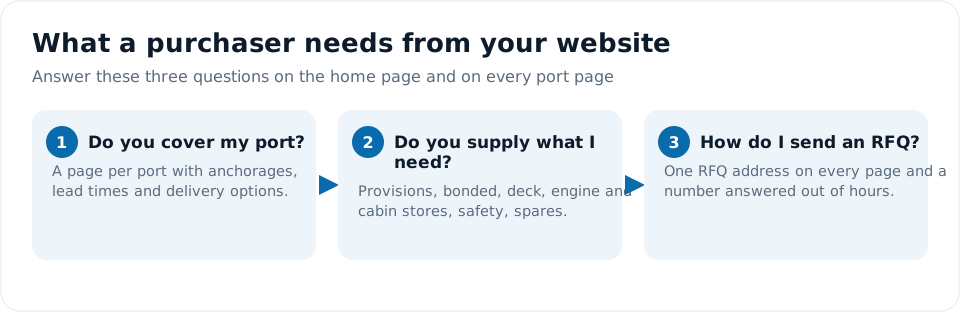
A buyer who lands on your site wants to know: do you cover my port, do you supply what I need, and how do I send you an RFQ. Put those answers on the home page in plain words.
A page per port you serve, with anchorages, typical lead times, launch or truck delivery, and any customs or bonded store notes. These pages are what people find when they search a port name plus “ship chandler”.
A clear product scope: provisions, bonded stores, deck, engine and cabin stores, safety, chemicals, technical spares.
One RFQ email address shown on every page, plus a phone or messaging number that someone answers out of hours.
Proof you are real: registration details, certificates, a physical address, photos of your own warehouse and launches rather than stock images.
2. Show up where purchasers search
Search engines and, more and more, AI assistants are how a buyer covering an unfamiliar port finds options. You do not need to pay for ads to appear. Keep your business profile on maps services accurate, make sure each port page names the port clearly in its title, and answer the common questions buyers ask in plain text on your site. A short page explaining how you handle urgent deliveries at anchorage is more useful than a slogan.
3. Be listed where fleets look
Many fleets use e-procurement platforms or supplier networks to send RFQs. A complete, current profile on the ones your target customers use matters more than a listing on every directory you can find. Ask the purchasers you already work with which systems they use, and start there.
4. Look after the people who recommend you
Port agents, husbandry agents and crew managers are asked for supplier recommendations all the time. Make their life easier: reply quickly when they call, keep them informed when you deliver to a vessel they handle, and never make them look bad. The same goes for masters and chief cooks who move between vessels and fleets and take their favourite suppliers with them. For a practical way to spot ships before they call, see finding vessels before they call.
5. Use trade events selectively
Maritime trade shows can be useful for meeting purchasing teams in person, especially if you pre-book meetings with fleets that call your ports. Walking the floor and hoping is expensive. One well-prepared event a year usually beats several where you just staff a stand.
Buying email lists of “ship managers”. They are mostly out of date and can damage your sender reputation.
Generic social media posting with no link to how buyers actually order.
Stock photos of cruise ships if you mainly supply bulk carriers. Buyers notice.
The part marketing cannot fix
If your marketing works, you will get more RFQs. The supplier who wins them is still the one who replies first with a complete, accurate quote. If quoting is already the bottleneck, look at that before spending more on getting found. Our RFQ playbook puts the two together, and Tidal ship chandler software handles the quoting side.
The approaches that work best are a clear website with a page for each port served and one obvious RFQ address, accurate listings where fleets search and on the e-procurement platforms they use, strong relationships with port agents and crew, and selective attendance at maritime trade events with pre-booked meetings.
Do ship chandlers need a website?
Yes. Buyers covering an unfamiliar port often search for a supplier by port name, and a site that clearly states the ports, products and how to send an RFQ is often the first filter they apply.
Is paid advertising worth it for a ship chandler?
Usually not as a first step. The buyer audience is small and specialised, so clear port pages, accurate listings and agent relationships tend to bring better enquiries for far less money.
More RFQs only help if you can quote them fast
Send us a real RFQ and we will show you Tidal turning it into a priced quote on your own catalogue.
 Customer Login