Most chandlers we talk to say the same thing in different words: the work is there, but it goes to the same three or four names in the port. Getting more RFQs is less about advertising and more about being on the right lists, being findable at the moment a purchaser is looking, and being the supplier who replies first with a clean quote. This page pulls those pieces together and links to a deeper guide for each one.
Where RFQs come from in the first place
Before trying to get more of something, it helps to know where it comes from. For a typical port supplier, enquiries arrive through a handful of channels:
Ship managers and owners’ purchasing teams. The biggest and steadiest source. They send RFQs to suppliers already on their approved list for that port.
The vessel itself. Masters, chief engineers and chief cooks send requests directly, usually for provisions, cabin stores or urgent spares.
Port agents. When a vessel has no regular supplier in a port, the agent is often asked to recommend one.
E-procurement platforms and supplier networks. Some fleets push their RFQs through a platform and only invite suppliers who are registered there.
Search and referrals. A purchaser covering a port for the first time will search, ask colleagues, or check who else supplied the fleet before.
Each channel has its own entry ticket. The rest of this playbook is about buying those tickets.
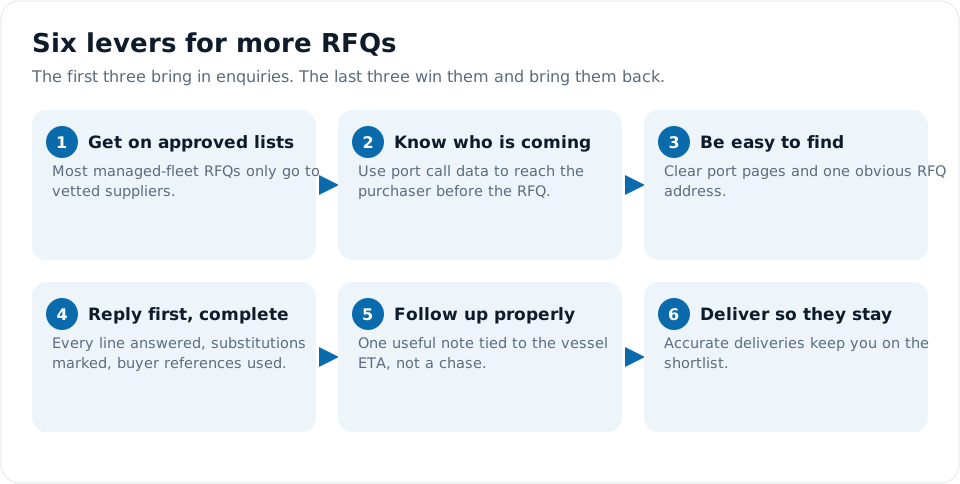
The six levers
1. Get on the approved supplier lists
Most of the volume from managed fleets only reaches suppliers who are already approved. That means vendor registration forms, documents, references and sometimes an audit. It is slow and dull, which is exactly why it filters out competitors who never finish it. Our guide to getting on a ship manager’s approved supplier list walks through what purchasing teams ask for and how to stand out once you are in.
2. Know which ships are coming before they ask
Port call data is public in a way it was not a decade ago. If you know a bulk carrier managed by a company you already supply is due in nine days, you can contact the purchaser before the RFQ goes out, not after. See finding vessels before they call for the practical routine.
3. Be easy to find for a purchaser covering your port
A superintendent or buyer looking for a supplier in a port they rarely visit will search the port name plus what they need. If your website does not say clearly which ports you cover, what you supply and how to send an RFQ, you are invisible at the exact moment it matters. Ship chandler marketing covers the handful of things worth doing and the ones that are a waste of money.
4. Reply first, with a quote they can actually use
Getting the RFQ is half the job. Purchasers compare suppliers on speed, completeness and how much tidying up a quote needs before it can be approved. A supplier who returns every line, priced and clearly marked where something is substituted, gets asked again. Winning more of the RFQs you already get goes into the details.
5. Follow up properly
An unanswered quote is not always a lost one. Vessels change ETA, budgets get approved late, and purchasers are busy. A short, useful follow-up often turns a silent quote into an order, and a polite question after a loss tells you how to price next time. See following up on marine quotes.
6. Deliver so well they stop shopping around
The cheapest RFQ to win is the repeat one. Purchasers keep a short list of suppliers they trust in each port, and they send to that list first. Complete deliveries, correct paperwork, honest substitutions and invoices that match the quote are what keep you on it. None of it is glamorous, but it compounds.
Here is the uncomfortable part. Many chandlers could get more RFQs tomorrow by asking for them, but they already struggle to quote the ones they have. If a large provisions RFQ takes most of a day to price by hand, every new enquiry pushes another one later, and late quotes lose. More enquiries only help if you can turn them around quickly. That is the problem Tidal ship chandler software is built for: it reads RFQs from your inbox, matches each line to your own catalogue and prices it with your own margin rules, so your team reviews a draft quote instead of building one from scratch. The RFQ-to-quote process guide breaks down where the hours go.
Want to see what faster quoting would mean for your yard? Try the RFQ savings calculator or talk to us about a real RFQ of yours.
Get approved by the ship managers and owners who call your ports, watch port call data so you can approach purchasers before they send the RFQ, make your website clear about the ports you cover and how to send an enquiry, reply quickly with complete quotes, follow up on open quotes, and deliver well enough that buyers send to you first.
Where do ship chandlers get RFQs from?
Mostly from ship managers and owners’ purchasing teams, directly from vessels (masters, chief engineers and cooks), from port agents asked to recommend a supplier, from e-procurement platforms that fleets use to send enquiries, and from search and referrals when a buyer covers a port for the first time.
Is it better to get more RFQs or win more of the ones I get?
Usually both, but start with win rate. If you already lose RFQs because quotes go out late or incomplete, more enquiries will mostly create more late quotes. Fix turnaround first, then push for volume.
More RFQs only help if you can quote them fast
Send us a real RFQ and we will show you Tidal turning it into a priced quote on your own catalogue.
 Customer Login