 Customer Login
Opening
A vessel arrives at port. The captain or superintendent sends an email, sometimes a PDF attachment, sometimes a formatted Word document, to three or four local chandlers, requesting quotes for provisions, deck stores, engine room supplies, and safety equipment. Each chandler receives the email, manually processes the line items against their stock and pricing, and responds with a quote, another email, another attachment, another spreadsheet.
The fleet operator compares the quotes manually, usually in a spreadsheet someone maintains by hand. A chandler is selected. A purchase order is issued. The goods are delivered to the vessel. A dispute arises because an item was substituted without notification. The resolution happens over email.
This is the ship chandling procurement process in 2026. It is the same process that ran in 2006. The global ship chandling market is estimated at over $15 billion annually, serving more than 50,000 port calls per year across the world's major maritime hubs. The digital maturity of this market's core workflow, the RFQ-to-order cycle, is closer to 1995 than to 2025.
Why It Matters
The maritime industry is digitising rapidly at the operational level. Maritime digitisation is a $165 billion market in 2025, growing at 11.5% annually. AI-driven voyage optimisation, IoT sensor monitoring of hull and engine performance, predictive maintenance systems, and digital compliance reporting are all active and accelerating. The Wärtsilä Marine survey from 2025 found that approximately 66% of shipping companies have begun their digital transformation journey, with 69% actively exploring digital solutions.
The gap is in procurement. The systems that handle route optimisation and emissions monitoring are sophisticated. The system that handles "buy provisions for this vessel at this port" is an email chain.
This matters because procurement is a direct cost centre. A typical provision order for a bulk carrier crew of 20 ranges from $3,000 to $12,000 per port call. A tanker or container ship with a larger crew and more complex supply needs places significantly larger orders. Across a fleet of 20 vessels making port calls every 2-3 weeks, annual chandling spend runs into the millions. The efficiency of the procurement process, the speed of quote comparison, the accuracy of order fulfilment, the ability to benchmark prices across chandlers, directly affects the cost of that spend.
What the Industry Looks Like Right Now
On the chandler side: A ship chandler receives RFQs by email throughout the day, many arriving simultaneously from multiple vessels and fleet operators. Each RFQ is a document, sometimes a standardised IMPA code list, more often a vessel-specific format that requires manual interpretation. The chandler's team manually prices each line item, checks stock availability, and prepares a quote response. RFQ response times vary from hours to days depending on the chandler's workload and the complexity of the order.
The chandler who responds fastest with an accurate, competitive quote wins the business. The chandler still processing yesterday's queue while today's RFQs accumulate loses it, not because their pricing is worse, but because the fleet operator has already committed to whoever responded first.
On the fleet operator side: A superintendent managing a fleet of vessels across multiple trade routes receives incoming quotes from multiple chandlers at each port, in multiple formats, on a rolling basis. Comparing quotes requires opening each response, manually extracting the relevant line items, and building a comparison. This process is error-prone, time-consuming, and dependent on the superintendent's availability at the time quotes arrive.
Fleet operators with dozens of vessels and hundreds of port calls per year are making tens of millions of dollars in procurement decisions through a process that would not pass muster as a business workflow in any other industry of comparable scale.
Winners and Losers
The winner today is the chandler who has invested in faster quote processing, whether through internal systems, additional staff, or any tool that reduces the time between receiving an RFQ and sending an accurate response. Speed-to-quote is the primary competitive differentiator in an industry where the product (provisions, stores, equipment) is substantially similar across reputable chandlers in the same port.
The loser today is the chandler with good pricing and strong relationships who consistently loses business because their quote arrives second. In a market where the fleet operator receives three to five quotes and commits to the first acceptable one, arriving 20 minutes late is commercially equivalent to not quoting at all.
The structural winner in the digitisation transition will be the chandler who establishes an operational relationship with fleet operators through a digital platform before that platform becomes the expected standard. Early adopters of digital procurement get the relationship advantage of being part of the platform's launch, the operational advantage of a faster quote process, and the data advantage of a complete history of quotes, orders, and supplier performance, all before their slower-moving competitors catch up.
What This Means for Your Business
If you are a ship chandler, the email-and-PDF workflow is not a stable long-term position. Fleet operators are beginning to consolidate their procurement through platforms that make quote comparison systematic rather than manual. A chandler who is not on those platforms is invisible to the procurement process, regardless of their pricing or quality.
If you are a fleet operator or superintendent, the current procurement workflow is costing you in ways that are hard to quantify precisely but easy to feel: time spent on quote comparison, errors from manual data entry, disputes from substitutions that were not clearly communicated, and the absence of any benchmarking capability across ports and suppliers over time.
The digitisation of maritime procurement is not a question of whether, it is a question of when and who moves first.
Act On This Now
Map your current RFQ-to-order cycle time for a typical port call. From the moment the requisition leaves the vessel to the moment a chandler is confirmed: how many hours? How much of that time is waiting for quotes? How much is manual comparison? How much is back-and-forth on substitutions and pricing?
That time is recoverable. The workflow that currently runs on email can run on a structured digital platform, with RFQs dispatched simultaneously to multiple chandlers, quotes returned in a standardised format for direct comparison, orders confirmed with clear substitution policies, and a full procurement history available for benchmarking and audit.
Key Takeaways
- The $15 billion ship chandling market runs its core procurement workflow, the RFQ-to-order cycle, on email and PDFs, unchanged for decades.
- Speed-to-quote is the primary competitive differentiator for chandlers; the current email-based process makes this dependent on response speed rather than pricing or quality.
- Fleet operators are making millions in annual procurement decisions through a workflow that would not pass muster in any other comparable industry.
- Maritime digitisation is accelerating at the operational level (voyage optimisation, predictive maintenance) but has not yet reached procurement, this is the gap.
- The chandlers and fleet operators who digitise procurement first will have a structural advantage before the market catches up.
FAQ
Q1. Is the ship chandling industry actually resistant to digitisation, or is it just slow?
The industry is slow, not resistant. The RFQ process is fundamentally information processing, receiving requirements, pricing items, returning quotes, tracking orders. Digital tools handle this category of workflow in every other industry. The delay in maritime is a combination of industry conservatism, the fragmented geography of port operations, and the absence of a platform that both chandlers and fleet operators are willing to adopt simultaneously. Bilateral marketplace problems require a critical mass of both buyer and seller adoption.
Q2. What about IMPA codes, do digital platforms handle the standardised maritime supply catalogue?
Yes. IMPA (International Marine Purchasing Association) codes are the standard for categorising maritime supplies. Digital procurement platforms designed for maritime supply include IMPA code lookup and matching, allowing chandlers to respond to standardised requisitions more quickly and fleet operators to receive comparable quotes.
Q3. How do chandlers handle substitutions in a digital workflow?
Substitutions are one of the primary sources of disputes in manual chandling. A digital workflow handles this by requiring explicit substitution notification at the quote stage, the chandler flags a substituted item, provides the alternative specification, and the fleet operator approves or rejects before the order is confirmed. This eliminates post-delivery disputes from undisclosed substitutions.
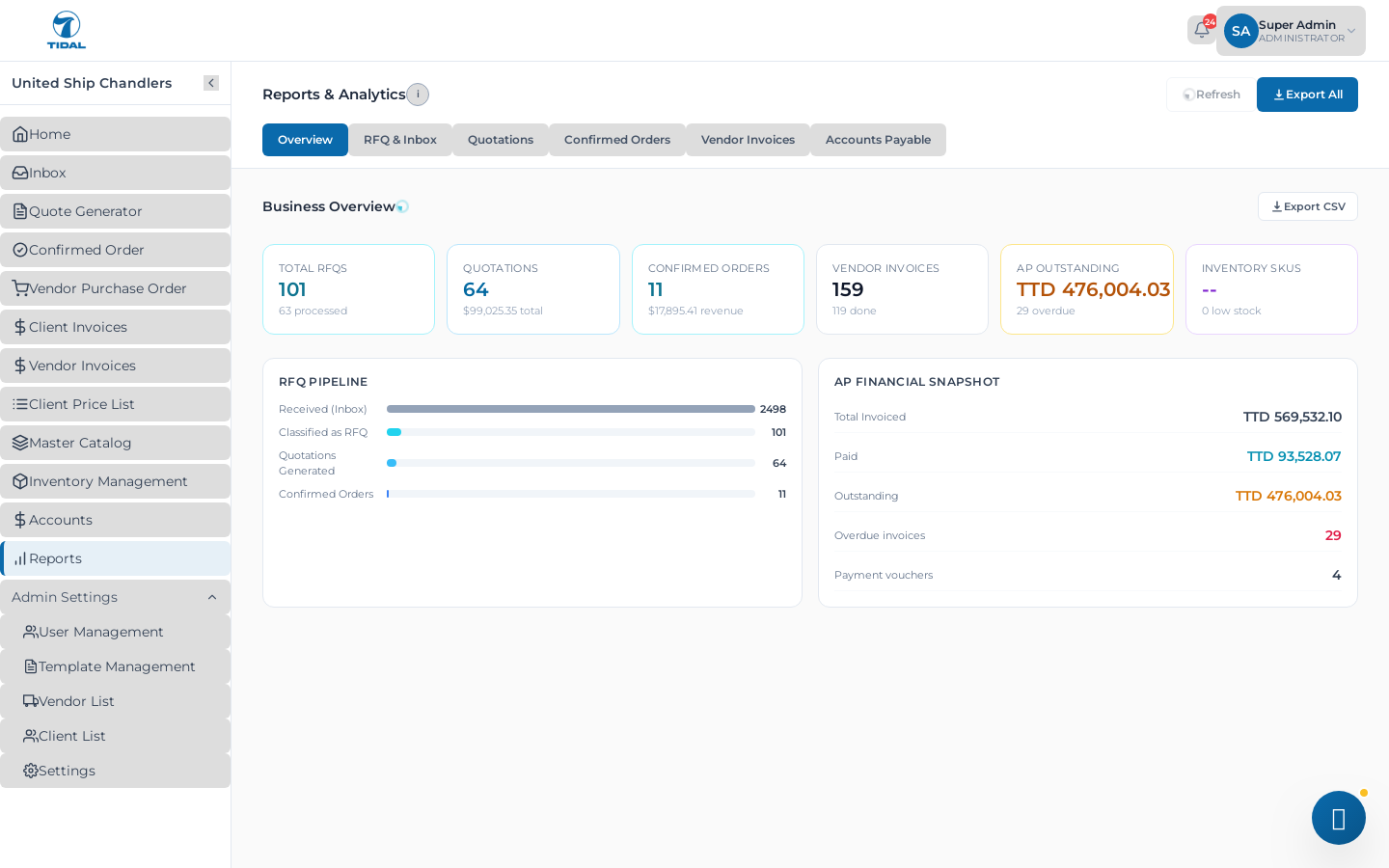
Tidal is building the digital layer that maritime procurement has been missing. Both sides of the marketplace, chandlers and fleet operators, operating in one structured platform. Request a Demo →